L Lady's Island Mosquito Control

Beaufort, SC Coverage

Mosquito Control in Laurel Bay, SC 29906

Private yard mosquito control and spraying for Laurel Bay homes near Beaufort, SC. We treat individual properties, shaded spots and standing water the county truck and aircraft skip.

  • ✓Mon-Fri 9am-9pm, Closed Weekends
  • ✓Barrier & Residual Yard Treatments
  • ✓Beaufort, Lady's Island & Sea Islands

Laurel Bay sits along Laurel Bay Road on the mainland side of Beaufort County, surrounded by pine woods, drainage ditches and tidal creeks that feed into Battery Creek. The military housing neighborhoods here sit close to MCAS Beaufort, where raised homes on piers and older lots collect water in gutters, plant saucers and low spots after summer storms and king tides.

County spraying covers roads and public land but leaves private yards untouched. Our technicians focus on the lots themselves, using backpack mist blowers to reach shrub beds, ivy, crawl space vents and the undersides of leaves where salt marsh mosquitoes and Asian tiger mosquitoes rest during the day.

Long warm seasons keep mosquitoes active from March into November on these tidal-influenced properties, so regular barrier treatments and larvicide in undrainable water help cut down the biting pressure that builds around screened porches and outdoor living areas.

Around Laurel Bay

We regularly work near:

  • 📍Laurel Bay Road
  • 📍MCAS Beaufort
  • 📍Battery Creek
  • 📍Laurel Bay Military Housing

Mosquito Control in Laurel Bay — Local Notes

  • •Laurel Bay military housing lots often have drainage swales and retention areas that hold water after rains, creating breeding sites close to foundations and under raised homes.
  • •Pine woods and thick understory around the neighborhood provide shaded resting spots for daytime biters, so residual treatments target those edges along with docks and boat covers.
  • •Proximity to Battery Creek and nearby marsh means salt marsh mosquitoes move in on tidal flooding, while container breeders thrive in the many plant saucers and tarps common on these properties.

Common Mosquito Problems in Laurel Bay

Salt-marsh mosquito swarms after spring tides

Why it happens here Aedes taeniorhynchus breeds in the spartina grass along Whale Branch and the tidal creeks. Every spring tide leaves new water in the marsh, and the eggs hatch within days. The adults fly inland and hit the yards closest to the marsh first, which means Horse Island and the marsh-front streets get hit hardest. larvicide in the flooded ditches kill the larvae before they take wing. On top of that we barrier-spray the upland zone where adults rest, so the ones that do emerge die quickly.

Standing water in roadside ditches and low swales

Why it happens here Beaufort County maintains the roadside ditches, but they still hold water after heavy rain and spring tides. The low swales in some Laurel Bay yards never drain at all because the soil is heavy and the water table is high. These spots breed Culex mosquitoes, which are the ones that carry disease. Our approach We treat every ditch and swale on the property with larvicide, and we re-treat every three to four weeks through the warm season. For swales that never drain, we can pump them out on the first visit and then keep them treated. We also flag them on your service log

No-see-um bites in damp mulch and shaded soil

Why it happens here Biting midges breed in damp organic matter, and Laurel Bay yards with heavy mulch beds and oak shade have plenty of it. The soil stays wet longer here because the canopy blocks the sun and the humidity stays high. Midges are small enough to pass through standard window screens, so they get indoors too. Our approach We treat the soil line and the mulch beds with a residual product labeled for biting midges, and we re-treat every three weeks. For yards close to the marsh we add a second pass along the wettest soil. We also recommend thinning the mulch in the worst spots so it

Tick and flea pressure from deer and dense vegetation

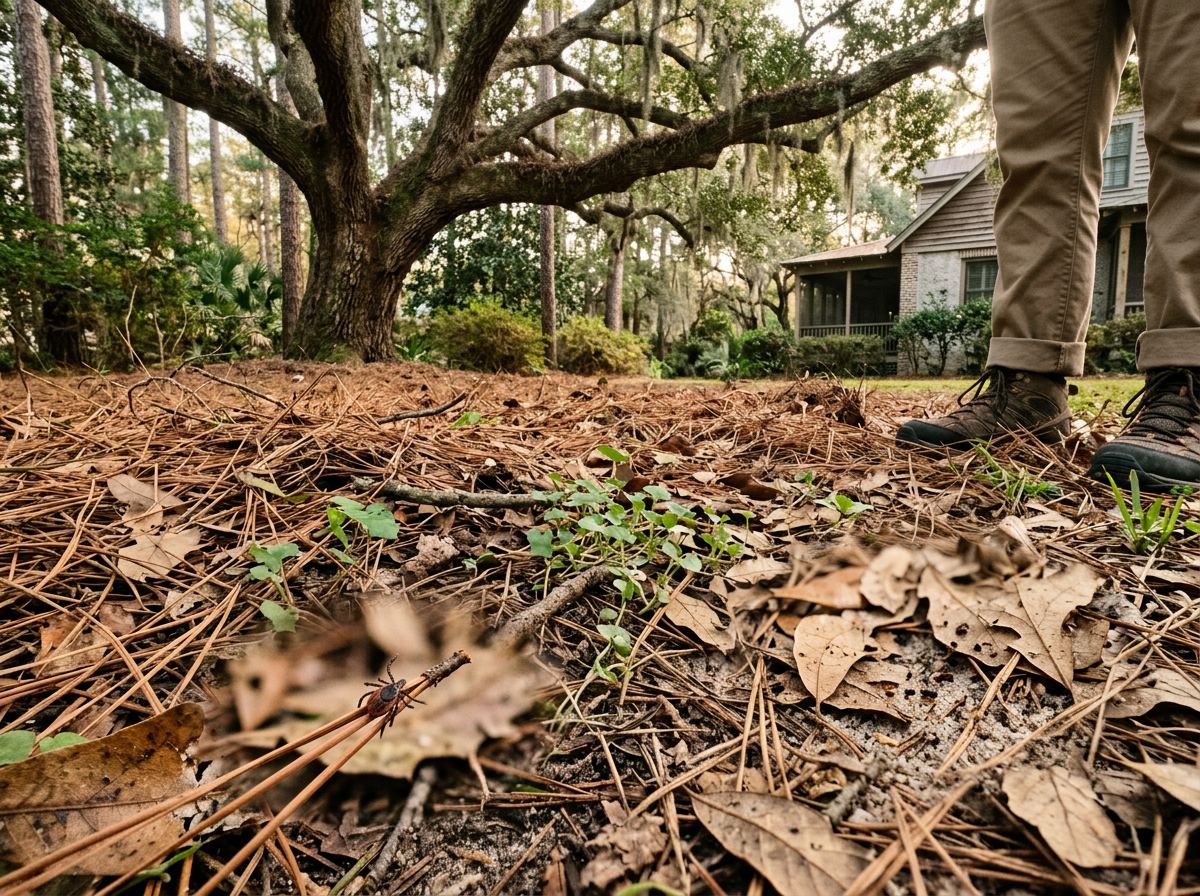
Why it happens here Laurel Bay has deer traffic through the green spaces and the wood lines, and deer carry ticks. The same shaded leaf litter that holds mosquitoes holds fleas and tick nymphs. Pets pick them up in the yard and bring them inside, which turns a yard problem into a house problem. Our approach We treat the leaf litter, the wood line, and the paths pets use with a residual product labeled for ticks and fleas. Most Laurel Bay yards need this twice a season, once in spring and once in early fall. We time the fall treatment to hit the adult tick activity before the weather cools. Yea

Signs You Need Mosquito Control in Laurel Bay

  • Bites in the middle of the day
  • Standing water that never dries out
  • You see mosquitoes resting on shaded walls and fences
  • Guests complain every time you host outside

Good to know

Mosquito Control in Laurel Bay — FAQs

Still have questions? We're happy to talk it through.

(843) 555-0147
+ How does mosquito pressure in Laurel Bay differ from downtown Beaufort neighborhoods?
Laurel Bay's pine woods, ditches and closeness to Battery Creek bring more salt marsh mosquitoes and standing water issues than the historic district streets, so we inspect and treat the specific lot features county spraying does not reach.
+ Do you treat military family housing yards in Laurel Bay?
We provide private yard treatments on individual residential and small commercial properties in Laurel Bay, focusing on the shaded areas, crawl spaces and water-holding spots that public county work leaves alone.
+ What time of year do mosquitoes stay active around Laurel Bay lots?
The humid subtropical climate keeps mosquitoes active from March through November, with extra pressure after summer thunderstorms and high tides that flood marsh edges and fill drainage features.

Need Mosquito Control in Beaufort, SC?

Talk to a local mosquito control company serving Beaufort and nearby neighborhoods. Workmanship you can inspect directly on your property after each visit.

Business hours

Mon–Fri 9am–9pm

701 Carteret St, Beaufort, SC 29902

Call now Request a callback