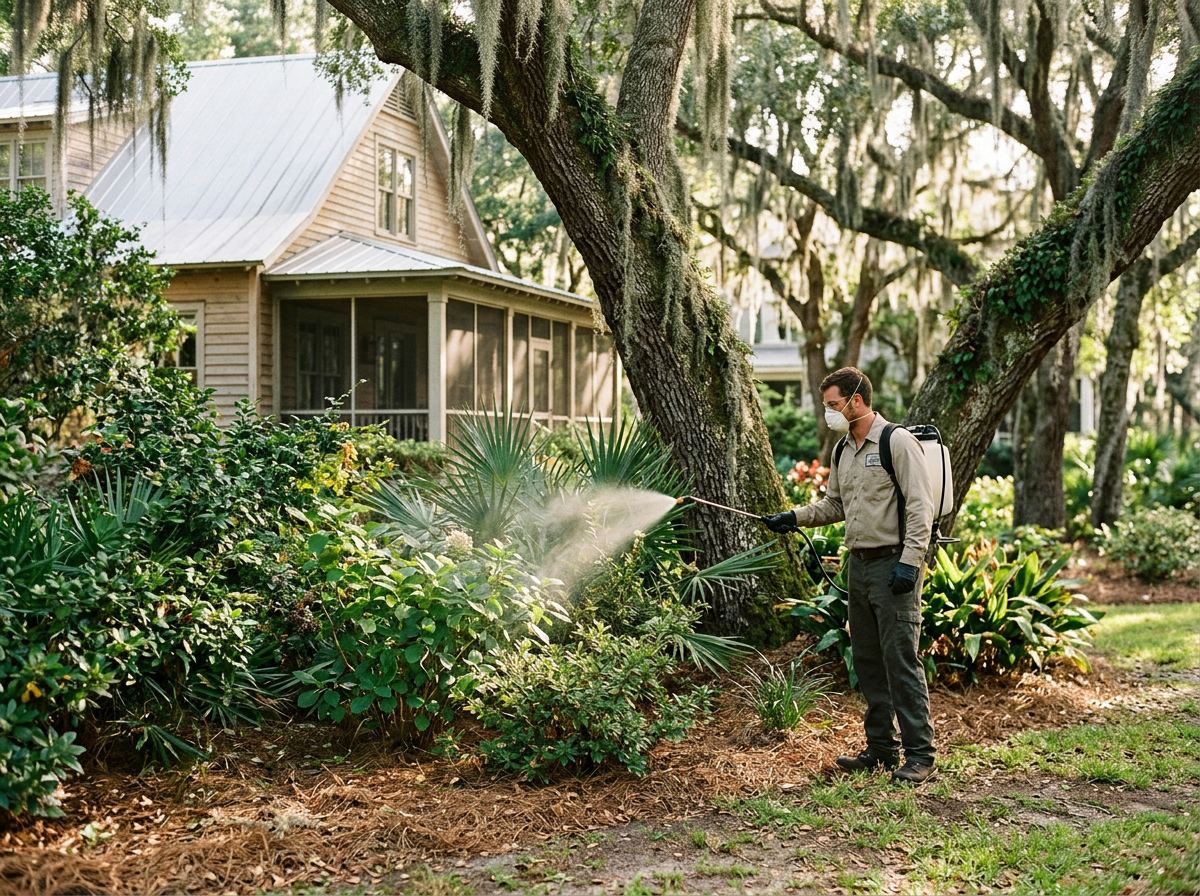
Beaufort sits amid tidal salt marshes that produce salt marsh mosquitoes active from March through November, while Asian tiger mosquitoes breed in containers and bite during daylight hours on shaded porches and under live oaks draped with Spanish moss. These insects rest in shrub beds, ivy, crawl space vents and the undersides of raised houses on piers throughout neighborhoods such as The Point, Spanish Point and Higginsonville. Our technicians inspect for larvae in plant saucers, birdbaths, tree holes, gutters and drainage swales that fill after near-daily summer thunderstorms or king tides along the Beaufort River and Battery Creek.
High marsh flooding and storm surge regularly re-wet lots near Port Royal Sound and the Coosaw River, so we locate standing water that cannot be drained and apply larvicide plus insect growth regulator to prevent pupae from emerging. On antebellum and Victorian properties with deep porches and screened outdoor kitchens we use a backpack mist blower to place residual treatment on leaf undersides where mosquitoes rest between dawn and dusk activity periods. We also treat under decks, dock boxes, tarps and jon boats that collect water on marsh-front and tidal-creek lots.
After mapping breeding sites our technicians apply barrier material to foliage, shrub beds and shaded resting areas while reducing larvae in retention ponds, ditches and bromeliads that hold water on lots in Mossy Oaks or along Lady's Island Drive. Re-treatment intervals account for rain wash-off from afternoon storms and the steady coastal humidity that keeps vegetation moist. This property-level work complements the county's area-wide efforts on public roads and parks without overlapping them.
Technician insight
In Beaufort the thing that catches most people out with Mosquito Barrier Treatment is how king tides and afternoon storms keep re-flooding the high marsh fringe on lots along the Coosaw River or Battery Creek, so any work on Spanish Point or The Point properties has to account for those daily water level swings or the barrier breaks down fast.
Spanish Point Marsh-Edge Lot
Homeowners noticed daytime bites on the screened porch after summer rains. We found larvae in bromeliads and tree holes plus resting mosquitoes under the raised house and live oaks. Our technicians applied larvicide to the containers and residual barrier to the foliage and crawl space vents. The property stayed usable through the remaining warm months without the previous level of activity.
Mosquito Barrier Treatment Services We Offer
✓Marsh-Front Lot Barrier Applications
Residual treatment placed on vegetation and structures where salt marsh mosquitoes move from tidal edges onto yards along Battery Creek and similar waterways.
✓Container and Standing Water Larvicide Service
Targeted applications to plant saucers, birdbaths, gutters and other undrainable sites that hold water after thunderstorms or high tides.
✓Shaded Resting Area Treatments
Backpack mist blower work on the underside of live oak leaves, shrub beds and ivy where Asian tiger mosquitoes rest during the day.
✓Under Deck and Crawl Space Applications
Treatment of the protected areas beneath raised Lowcountry houses and decks where mosquitoes find shelter from wind and sun.
✓Dock and Outdoor Kitchen Barrier Service
Residual material applied to dock pilings, boat covers and screened porch foliage to reduce bites during evening use.
How it works
- 1
Property Inspection
Our technicians walk the lot to locate breeding sites in containers, tree holes, drainage features and marsh edges while noting resting areas on foliage and structures.
- 2
Breeding Site Reduction
We treat larvae and pupae in water that cannot be emptied and advise on simple changes to gutters, tarps and plant containers that limit future production.
- 3
Barrier Application
Residual treatment is applied with a backpack mist blower to leaf undersides, shrub beds and shaded spots while larvicide addresses remaining water sources.
- 4
Re-Treatment Scheduling
We set follow-up visits based on local rain patterns, tidal cycles and observed mosquito pressure to maintain the barrier through the warm season.