Beaufort's humid subtropical climate keeps mosquitoes active from March into November. Salt marsh mosquitoes fly in from tidal creeks and high marsh after king tides or storm surge, while Asian tiger mosquitoes breed in containers around homes and rest in live oak shade and ivy. Container-breeding species also develop in gutters, plant saucers, and tree holes on lots in The Point, Spanish Point, and Higginsonville. County truck and aircraft work reduces numbers across public land but leaves private yards, docks, and porches untreated.
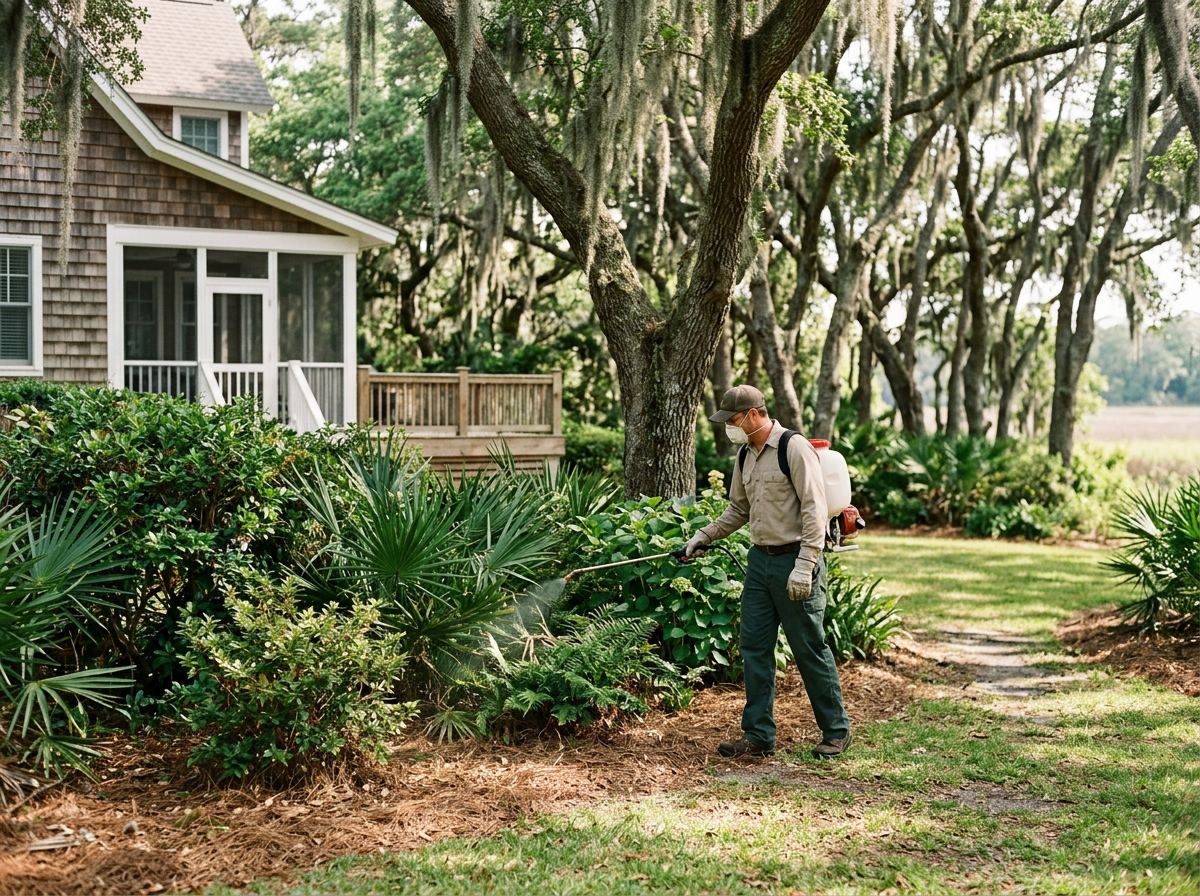
Our technicians begin with a yard inspection that maps standing water, drainage swales, and shaded spots under decks or raised Lowcountry houses. We apply residual barrier treatment to leaf undersides and shrub beds with a backpack mist blower, then place larvicide or insect growth regulator in water that cannot be drained such as bromeliads and retention ponds. On marsh-front lots near Battery Creek or the Beaufort River we also treat dock boxes, boat covers, and crawl space vents where daytime biters hide.
Re-treatment intervals account for summer thunderstorms that wash residue and for the long warm season that lets new larvae hatch after each high tide. We focus on the specific resting areas around screened porches, outdoor kitchens, and Spanish moss-draped oaks common to antebellum and raised pier homes. This property-level work fills the gap left by county sprays on public roads and waterways throughout Port Royal, Lady's Island, and St. Helena Island.
Technician insight
In Beaufort, the thing that catches most people out with Seasonal Mosquito Program is how tidal flooding and king tides push salt marsh mosquitoes from the high marsh straight onto lots with raised houses on piers. Homeowners often miss the water that collects under those houses and in dock boxes after each cycle.
Spanish Point Waterfront Lot
A homeowner on a tidal creek lot noticed daytime biters on the porch despite county sprays. We found larvae in bromeliads and standing water under the raised house plus heavy resting activity in ivy along the marsh edge. Barrier treatment and larvicide placement reduced activity within days and follow-up visits kept the yard usable through the remaining warm season.
Seasonal Mosquito Program Services We Offer
✓Initial Yard Inspection and Mapping
We walk the full lot to locate breeding sites in containers, tree holes, and drainage areas that county sprays never reach.
✓Barrier Treatment on Vegetation
Residual application reaches the underside of leaves and shrub beds where mosquitoes rest during the day on Lowcountry lots.
✓Larvicide Placement in Standing Water
We treat water that cannot be emptied such as plant saucers, birdbaths, and tidal swales to stop larvae before they emerge.
✓Dock and Perimeter Service
Targeted work on docks, boat covers, and marsh edges reduces salt marsh mosquitoes that move onto private waterfront properties.
✓Seasonal Re-Treatment Visits
Follow-up applications maintain protection through thunderstorm wash-off and repeated tidal flooding common in Beaufort County.
How it works
- 1
Site Walk And Breeding Site Survey
Technicians inspect every corner of the yard, noting containers, tree holes, and shaded areas around the home and dock.
- 2
Targeted Barrier Application
Residual treatment is applied to resting spots on vegetation and under structures using equipment suited to Lowcountry lots.
- 3
Larval Source Reduction
Larvicide or insect growth regulator is placed in any water that cannot be drained on the property.
- 4
Scheduled Follow-Up Treatments
Return visits are timed to local rain and tide patterns to keep protection consistent through the season.