2026-11-13 ·
Marsh-Front and Dock Living: Why Tidal Lots Get More Bites
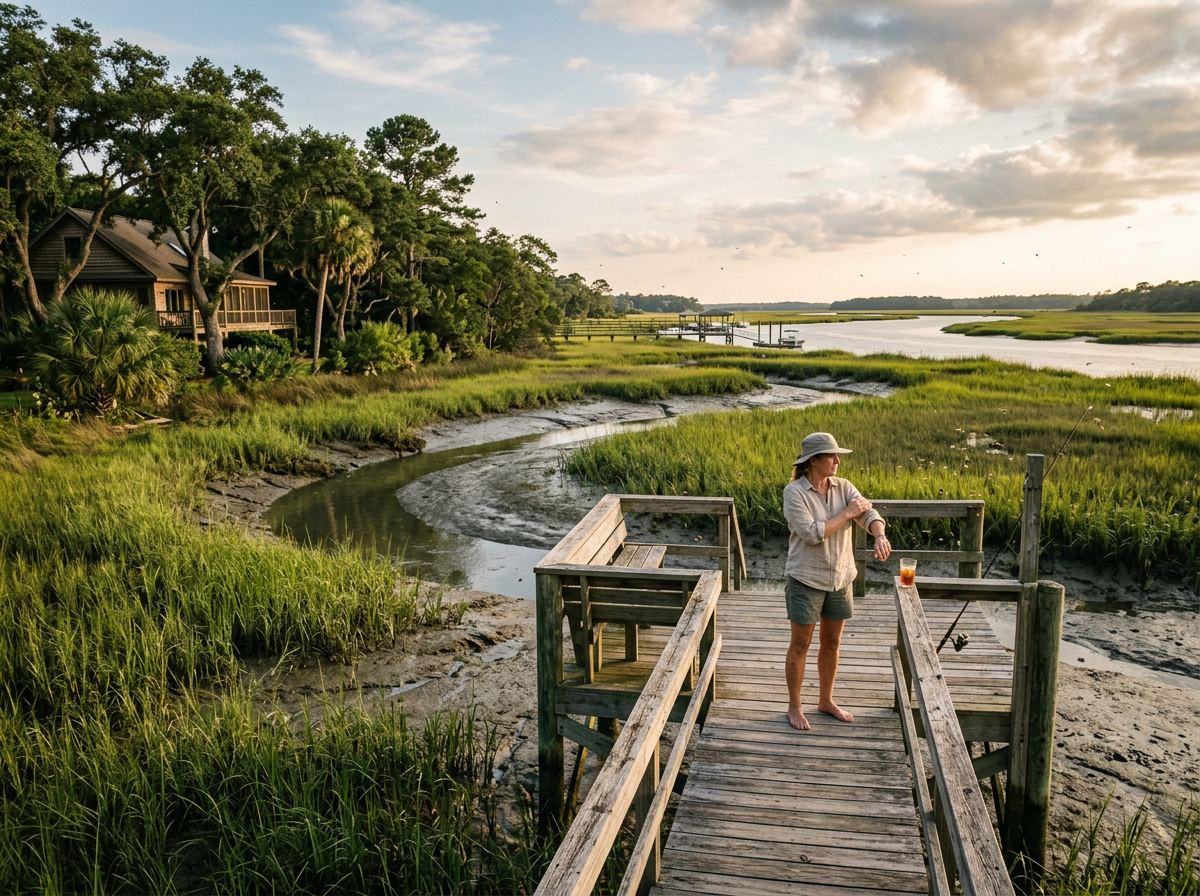
Tidal lots in Beaufort and on Lady's Island receive more bites because king tides, storm surge, and daily tidal flooding keep salt marsh mosquitoes supplied with standing water right up to the property line. The same conditions that make these homes scenic also maintain breeding sites in high marsh edges, drainage swales, and under docks that county truck and aircraft sprays do not reach.
Tidal Flooding and Salt Marsh Mosquito Breeding
Salt marsh mosquitoes lay eggs in the high marsh that hatch after each tidal cycle or heavy rain. On marsh-front properties the water line moves across lawns, under raised houses, and along dock pilings several times a month, refilling every low spot faster than it can dry. Homeowners notice the difference most after king tides when water sits in swales and behind bulkheads for days. These conditions favor species that travel farther from the marsh than typical container breeders. Our technicians focus on the transition zone between marsh and yard where larvae and pupae develop in water that cannot be drained. Our no-see-um control page explains how we handle this on a local lot. It comes up on nearly every visit we make in Bluffton.
Shaded Resting Spots Unique to Dock and Marsh-Front Lots
Raised Lowcountry homes on piers and crawl spaces create cool, humid pockets where mosquitoes rest during daylight hours. Spanish moss, live oak canopies, and boat covers trap humidity while blocking wind, giving Asian tiger mosquitoes and salt marsh species daytime shelter within feet of living areas. Docks and boat lifts add additional shaded structure over water that retains moisture even on sunny days. Barrier treatment applied with a backpack mist blower reaches the underside of leaves and the undersides of decks where these insects hide. The same treatment also covers shrub beds and ivy that line many tidal lots. This is the situation our mosquito misting systems visits are built around.
Standing Water Sources That Tide and Rain Refill
Every marsh-front yard holds multiple breeding sites that refill with each tidal push or afternoon thunderstorm. Common spots include plant saucers, gutters, boat covers, kayaks stored upside down, and drainage ditches that connect directly to the marsh. Tree holes in live oaks and bromeliads trap water that stays shaded for weeks. Larvicide treatment placed in water that cannot be eliminated stops development before adults emerge. A yard inspection identifies these sites before they produce another generation. The same applies to properties in St. Helena Island.
How County Sprays and Private Work Differ on Tidal Properties
Beaufort County Mosquito Control sprays public areas by truck and aircraft as a public service. That work reduces mosquitoes area-wide but does not treat an individual yard, porch, dock or event. Marsh-front and dock properties still need direct attention to the lot itself because tidal flooding and shaded resting areas lie outside the county program. We combine barrier treatment on vegetation with larvicide in persistent water and, when requested, mosquito trap stations to monitor activity near docks and screened porches. Homeowners in Mossy Oaks ask us about this often.
For more detail on what public spraying covers and where private service begins, see Does Beaufort County Spray for Mosquitoes? What It Covers and What It Does Not. Homeowners on St. Helena Island and Fripp Island who want focused work on marsh edges often add Marsh-Front Property Mosquito Control to their seasonal plan.